
As remote work becomes a permanent fixture in today’s business landscape, Houston employers are facing a new set of operational challenges—especially in areas like human resources and payroll management.
Whether you’re a growing startup or a mid-sized enterprise, ensuring seamless bookkeeping Houston standards while staying compliant with employment laws requires a strategic shift in processes, technologies, and policies.
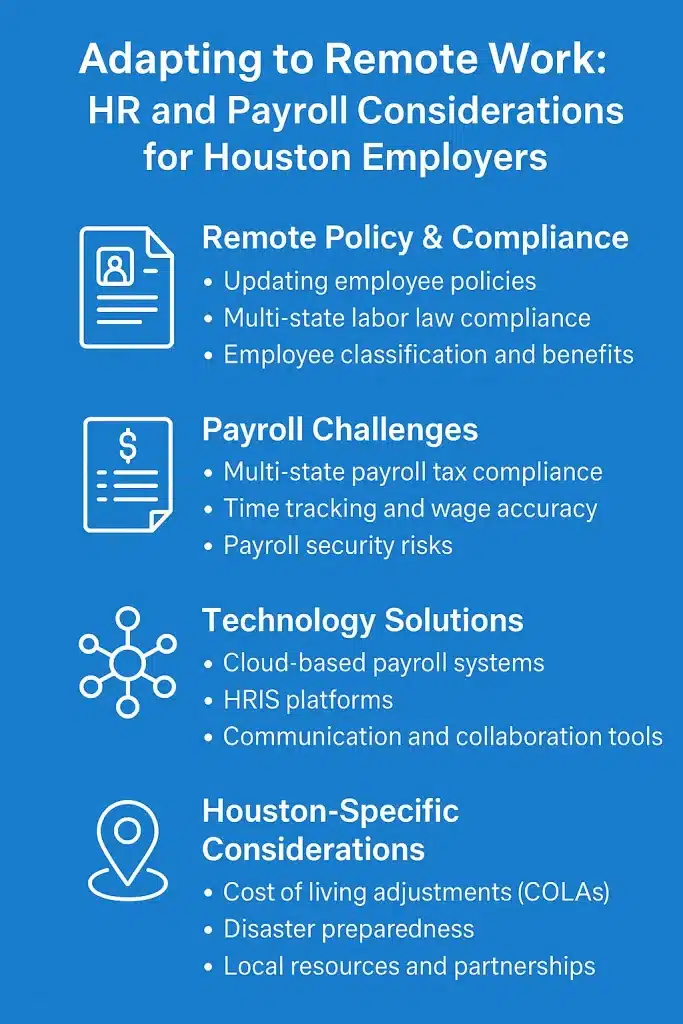
The Remote Work Shift: A New Normal for Houston Businesses
The transition to remote work, once seen as a temporary response to crisis, has become an embedded component of organizational strategy.
According to a 2023 survey by McKinsey, 58% of employees in the U.S. report having the option to work remotely at least part of the week, with 35% doing so full-time.
Houston, with its thriving energy, medical, and tech sectors, is no exception.
As companies embrace distributed teams, it’s essential to consider how remote work impacts HR functions like hiring, onboarding, payroll, and legal compliance.
Remote Policy, Compliance & Employee Engagement
1. Updating Employee Policies and Handbooks
A remote workforce requires updated employee manuals that clearly outline expectations, working hours, technology usage, and reimbursement protocols.
Employers should also formalize remote work agreements specifying eligibility, performance expectations, and legal jurisdiction.
2. Labor Law Compliance Across State Lines
If your remote employees work outside Texas, your HR team must comply with multi-state labor laws.
This includes understanding wage and hour laws, sick leave mandates, and tax obligations in each employee’s state.
Our blog on HR compliance strategies in Houston offers an in-depth guide for navigating these complexities.
3. Employee Classification and Benefits
The rise of freelancers and contractors has complicated employee classification. Misclassifying a worker can result in hefty fines from the IRS.
Use the DOL’s guidelines or consult legal counsel to ensure correct classification and that benefits like healthcare and paid time off are appropriately allocated.
4. Remote Onboarding and Company Culture
Onboarding remotely can feel impersonal. HR departments must implement digital onboarding tools and proactive communication strategies to maintain company culture and foster engagement.
Regular video check-ins, mentorship pairings, and virtual team-building activities go a long way.
Let us help you streamline your HR bookkeeping processes and stay compliant with evolving labor laws. Talk to a bookkeeping expert today.
Payroll Challenges in a Remote Work Environment
1. Multi-State Payroll Tax Compliance
With employees in various states, payroll departments must navigate different state and local tax laws. For example, Texas has no state income tax, but other states like California or New York do.
Payroll systems must account for withholdings, unemployment insurance, and local taxes based on the employee’s location—not the employer’s.
2. Time Tracking and Wage Accuracy
Under the Fair Labor Standards Act (FLSA), non-exempt employees must be paid for all hours worked, including overtime. Remote work complicates this.
Businesses need reliable time-tracking software to avoid wage-and-hour violations.
3. Payroll Security Risks
Remote operations increase cybersecurity risks. Payroll and HR departments handle sensitive personal and financial data, making them targets for cyberattacks.
It’s crucial to implement two-factor authentication, encrypted systems, and limited user access.
Our blog on data security in payroll and HR outlines best practices specific to Houston businesses.
Your payroll and HR records contain sensitive financial data. Our bookkeeping team uses secure, cloud-based solutions to safeguard your information and ensure peace of mind.
Technology Solutions for Remote HR and Payroll
1. Cloud-Based Payroll Systems
Solutions like Gusto, ADP, and QuickBooks Online allow businesses to manage payroll remotely with direct deposit, automatic tax filing, and compliance tracking.
These platforms integrate with other HR tools and ensure accuracy across state lines.
2. HRIS Platforms
Human Resource Information Systems (HRIS) like BambooHR or Zenefits centralize employee data, facilitate performance reviews, and help automate onboarding, benefits enrollment, and compliance tracking.
3. Communication and Collaboration Tools
Slack, Zoom, and Microsoft Teams have become essential for keeping distributed teams connected.
HR should standardize communication channels to streamline workflows and minimize confusion.
Houston-Specific Considerations
1. Cost of Living Adjustments (COLAs)
Should employees in lower-cost areas be paid the same as those in Houston? Some companies adopt location-based pay, while others maintain standardized compensation.
Employers must weigh fairness, competitiveness, and retention.
2. Disaster Preparedness
Houston is prone to hurricanes and flooding.
Ensure remote operations include business continuity plans that address power outages, communication breakdowns, and temporary relocation needs.
3. Local Resources and Partnerships
Organizations like the Houston HR Association (HR Houston) and the Greater Houston Partnership offer valuable resources, webinars, and local networking for remote work best practices.
Preparing for the Future: Trends to Watch
-
Hybrid Work Models: Employers are experimenting with flexible schedules and rotating in-office days.
-
AI in HR: Tools that use machine learning to screen candidates, track engagement, and personalize training are becoming more accessible.
-
Increased Outsourcing: Companies are outsourcing payroll and HR compliance to firms specializing in remote workforce management, especially for small to medium businesses.
What’s Next?
For Houston employers, adapting HR and payroll systems to support remote work is not just a matter of convenience—it’s a strategic imperative.
From ensuring multi-state compliance to adopting secure digital tools and maintaining employee engagement, businesses must take a proactive and informed approach.
If you need help streamlining your HR operations or navigating payroll complexities in a remote-first world, we are here to help.
We specialize in scalable support for companies like yours—offering expert guidance, system integrations, and ongoing compliance support.
Reach out today to schedule a free consultation and let’s build a remote work strategy that sets your business up for long-term success.
Your journey with us start today!