
Understanding these updates is essential for compliance and financial planning. Whether you’re a business owner navigating corporate tax shifts or an individual assessing property tax adjustments, these changes will have a direct impact on financial decision-making.
For businesses, managing tax compliance effectively requires precise financial record-keeping. At Profitline, we offer expert bookkeeping in Dallas to help you stay ahead of these tax changes, ensuring accurate reporting and streamlined financial management.
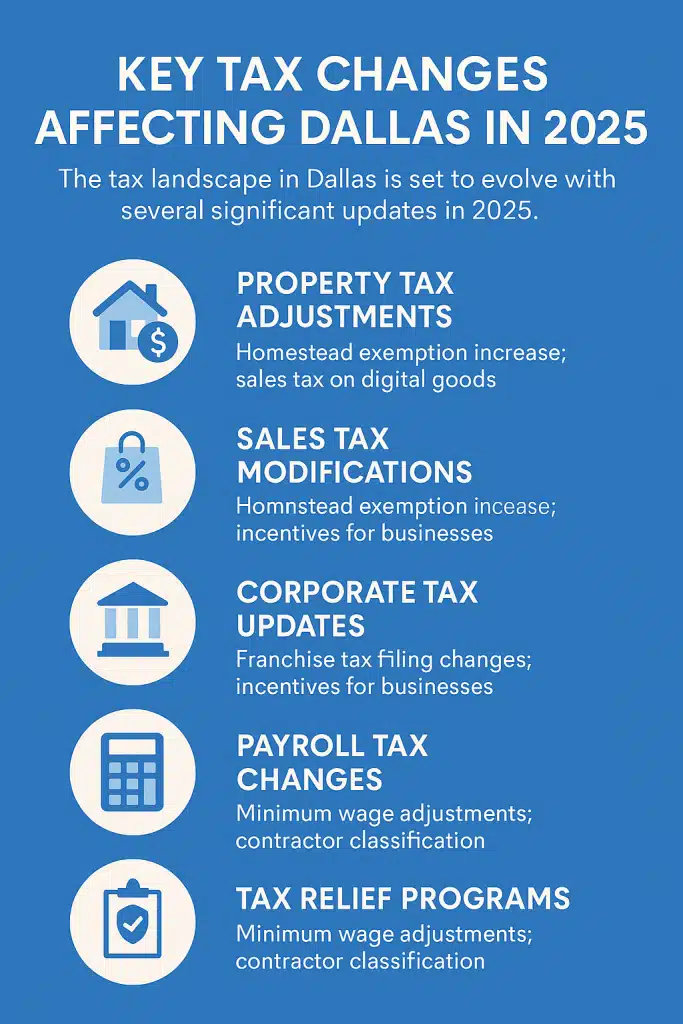
Key Tax Changes Affecting Dallas in 2025
The tax environment in Texas, particularly in Dallas, is experiencing shifts due to legislative changes and economic factors. Below are the major tax updates expected in 2025:
1. Property Tax Adjustments
Property taxes remain a major concern for both homeowners and businesses. Texas does not impose a state income tax, which means local governments rely heavily on property taxes for revenue.
-
Significant homestead exemption increases: The Texas Legislature approved a historic boost—raising the standard homestead exemption from $100,000 to $140,000, with seniors and disabled homeowners receiving up to $200,000 exemption via SB 4 and SB 23. If approved by voters this November, this could reduce school district taxes by around 50% for many homeowners.
-
Expanded relief for business personal property: HB 9 raises the exemption from $2,500 to $125,000 for business personal property—helping many small businesses.
-
Prop-backed funding: Texas plans to spend $51 billion over two years to maintain and introduce these property tax cuts.
2. Sales and Use Tax Modifications
Sales tax revenue plays a crucial role in Texas’s budget, and changes in tax collection policies can directly affect retailers and service providers.
-
Digital goods now taxable: Starting in 2025, Texas officially expanded its sales tax to include digital products and online marketplace sales.
-
Consistent base rate, flexible local add-ons: The state’s base sales tax remains 6.25%, but cities/counties can tack on up to 2%, bringing the maximum to 8.25%.
-
Marketplace facilitator enforcement: Texas Comptroller is scrutinizing online marketplaces to ensure third-party sellers aren’t evading tax collection.
3. Corporate and Business Tax Updates
Businesses in Dallas should prepare for adjustments to franchise taxes and other corporate tax policies.
-
Franchise tax filing changes: Entities with annual revenue ≤ $2.47 M no longer need a “No Tax Due” report but must still file a Public Information or Ownership Information Report.
-
Stable franchise tax rates: Retail/wholesale businesses will continue at a 0.375% margin tax rate in 2025.
-
New incentives available: Look for credits related to technology, renewable energy, and job creation to reduce corporate tax liabilities.
4. Payroll and Employment Tax Changes
Businesses managing payroll must stay updated on employment tax changes to avoid compliance issues.
-
Minimum wage & withholding alerts: While Texas has no state minimum wage, federal minimum wage and withholding thresholds have been updated for 2025.
-
Gig economy worker scrutiny: Expect enforcement on independent contractor classifications as state and federal authorities tighten compliance.
-
Unemployment tax potential changes: Employer rates may shift depending on workforce size and economic conditions.
5. Tax Relief and Incentives
To support businesses and homeowners, several tax relief programs and incentives are being introduced.
-
Small business relief: Qualifying SMBs may qualify for tax credits or reduced rates aimed at bolstering growth.
-
Energy-efficiency incentives: Businesses implementing renewable energy projects can offset costs through enhanced credits.
-
Historic property credits: Owners of designated historic sites may benefit from restoration-specific tax incentives.
-
Startup tax advantages: New businesses could be eligible for tax breaks during their formative years.
Preparing for Dallas’s Tax Changes in 2025
Navigating tax changes requires proactive financial management. Here’s how businesses and individuals can prepare:
- Review Your Tax Obligations – Regularly check for updates on state and local tax policies to ensure compliance.
- Maintain Accurate Financial Records – Detailed bookkeeping helps track deductible expenses and prepare for audits.
- Consult with a Tax Professional – Expert advice ensures businesses take full advantage of available deductions and credits.
- Implement Tax-Saving Strategies – Adjusting business operations to benefit from tax incentives can reduce liabilities.
- Ensure Timely Tax Filings – Late filings can result in penalties, making it crucial to stay on top of deadlines.
- Use Technology for Compliance – Automated accounting and tax software can simplify calculations and reporting.
- Evaluate Property Tax Appeals – If property assessments increase significantly, consider filing an appeal.
Contact us today and get to know us.
Why Professional Bookkeeping Matters
Sound bookkeeping is the backbone of tax readiness and financial health. With accurate, timely records, you can:
-
-
Align income and managed expenses for filings
-
Prepare solid documentation in case of audits
-
Spot deductions and credit opportunities early
-
Ensure correct payroll and sales tax processes
-
What’s Next?
Dallas’s evolving tax landscape in 2025 presents both challenges and opportunities for businesses and residents.
Staying informed about key tax changes—including property tax adjustments, sales tax modifications, and corporate tax updates—is crucial for financial stability and growth.
With expert services from Profitline, you can ensure compliance, optimize bookkeeping and focus on business success.
Reach out today for a FREE consultation about your business!