
Los Angeles is a thriving hub for freelancers, independent contractors, and gig economy workers.
However, managing finances as a gig worker comes with unique challenges, trust our bookkeeping Los Angeles services for your financial success.
A well-planned bookkeeping strategy not only ensures compliance with tax laws but also helps gig professionals budget effectively, maximize deductions, and set long-term financial goals.
This article explores how gig economy professionals in LA can adapt effective bookkeeping strategies to maintain financial stability and growth.
Why Bookkeeping Matters in the LA Gig Economy
Unlike traditional employees, gig workers juggle multiple income streams, fluctuating expenses, and complex tax obligations.
Without a structured approach to bookkeeping, it’s easy to fall behind.
Key bookkeeping concerns for gig workers include:
- Income Tracking – Payments can come from various sources like platforms, direct clients, or agencies, making it essential to consolidate earnings.
- Expense Management – Many gig workers rely on tools, subscriptions, and travel expenses for their work, which must be properly recorded for tax deductions.
- Tax Compliance – Without proper bookkeeping, gig workers risk penalties for underpayment or missing tax deadlines.
- Cash Flow Management – Inconsistent pay schedules mean that gig workers must develop strategies to maintain a steady cash flow.
- Retirement Planning – Gig workers must plan their own retirement savings to secure their future.
Essential Bookkeeping Strategies for Gig Workers in Los Angeles
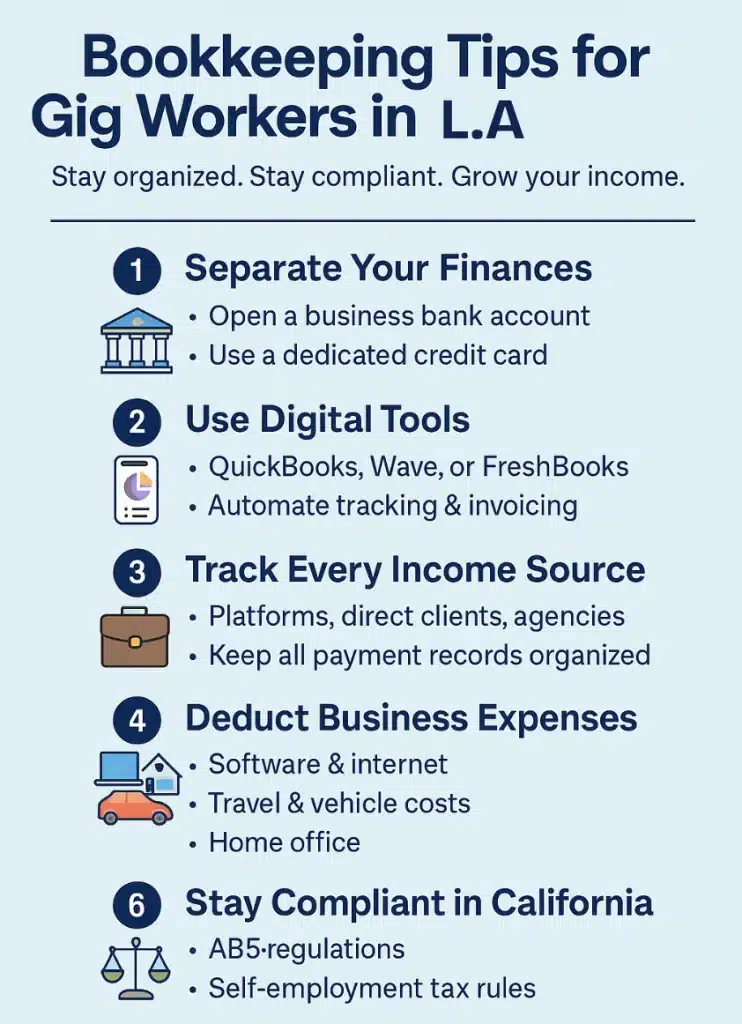
1. Separate Business and Personal Finances
One of the biggest mistakes freelancers and independent contractors make is mixing personal and business finances.
Opening a separate business bank account helps maintain accurate financial records, simplifies tax filing, and ensures better expense tracking.
A dedicated business credit card can also help gig workers organize expenses and build credit for future business investments.
2. Implement Digital Accounting Tools
Modern bookkeeping doesn’t have to be time-consuming. There are several apps and software solutions tailored to freelancers and small businesses, such as:
- QuickBooks Self-Employed – Tracks income and expenses automatically.
- Wave Accounting – A free alternative for invoicing and reporting.
- FreshBooks – Ideal for service-based professionals who need streamlined invoicing.
Not sure which tool is right for you? Let us recommend the best bookkeeping app for your gig work.
For more insights on tech-driven bookkeeping approaches, check out our article on modern bookkeeping solutions for Los Angeles startups.
3. Track Income from Multiple Sources
Since many gig workers receive payments from multiple clients, keeping detailed records of all transactions is crucial.
Using a bookkeeping system that categorizes income streams allows for easier tax reporting and financial analysis.
Spreadsheets can work for some, but digital tools offer automation and error reduction.
4. Deduct Eligible Business Expenses
Los Angeles gig workers often have numerous deductible expenses, including:
- Home office costs (if working from home)
- Internet and software subscriptions
- Business-related travel expenses
- Marketing and advertising costs
- Vehicle expenses
- Professional development and training
Maintaining receipts and documenting these expenses ensures maximum deductions when tax season arrives. The IRS allows many deductions for self-employed individuals, but without proper documentation, valuable write-offs may be lost.
5. Set Aside Money for Taxes
Unlike traditional employees, gig workers do not have taxes automatically withheld from their pay.
To avoid financial strain, a good rule of thumb is to set aside 25-30% of earnings for tax obligations.
Setting up a separate tax savings account can help gig workers manage their quarterly tax payments efficiently.
To stay ahead of tax deadlines and avoid surprises, check out our guide to tax season preparation for LA freelancers.
6. Stay Compliant with California Tax Laws
Los Angeles gig workers must adhere to both federal and state tax regulations. California has specific rules for independent contractors, including self-employment tax obligations and estimated tax payments.
Staying informed about state laws and working with a bookkeeping professional can prevent costly mistakes.
The recent AB5 law changes have impacted many gig workers, and keeping up with evolving tax regulations is essential.
Stay on the right side of the IRS and the state with our services.
Advanced Bookkeeping Strategies for Growth
1. Build an Emergency Fund
Due to unpredictable income, gig workers should set aside savings for emergencies.
Financial experts recommend having at least three to six months’ worth of expenses saved to cover slow periods.
Without an emergency fund, gig workers may struggle to cover essential costs during low-income months.
2. Invest in Retirement Planning
Unlike traditional jobs, gig work doesn’t come with employer-sponsored retirement plans.
Options such as SEP IRAs, Solo 401(k)s, and Roth IRAs help independent workers build long-term financial security.
Working with a financial advisor can help gig workers choose the best retirement plan for their needs.
3. Plan for Business Expansion
Many gig workers eventually transition into full-fledged business owners.
Whether it’s scaling a creative agency, launching an online store, or expanding consulting services, proper bookkeeping helps track growth and secure funding.
Keeping detailed financial records makes it easier to apply for business loans or grants in the future.
4. Work with a Professional Bookkeeper
As income grows, working with a bookkeeping expert becomes invaluable. A professional bookkeeper can:
- Ensure accurate tax filings
- Optimize deductions
- Provide financial insights for better business decisions
- Offer personalized financial planning strategies
What’s Next?
Navigating the gig economy in Los Angeles requires strong financial management.
With fluctuating incomes, tax complexities, and diverse expense categories, having a tailored bookkeeping strategy is essential.
Implementing digital tools, tracking expenses, and planning for taxes can help gig workers maintain financial stability and grow their businesses.
We go beyond basic number crunching.
We provide personalized bookkeeping solutions designed for gig economy professionals like you—solutions that help you stay compliant, seize every deduction, and build a stable, scalable business.
Keep your bookkeeping in order by contacting us today!