
In recent years, artificial intelligence has moved from buzzword to business staple—especially in human resources.
From recruiting and onboarding to performance tracking and payroll optimization, AI-driven tools are now embedded in HR workflows across industries.
For bookkeeping Houston professionals and HR leaders alike, this shift creates a new frontier of opportunities—and risks.
It’s essential to understand how AI intersects with compliance and operational integrity, particularly for local businesses operating in complex legal and economic environments.
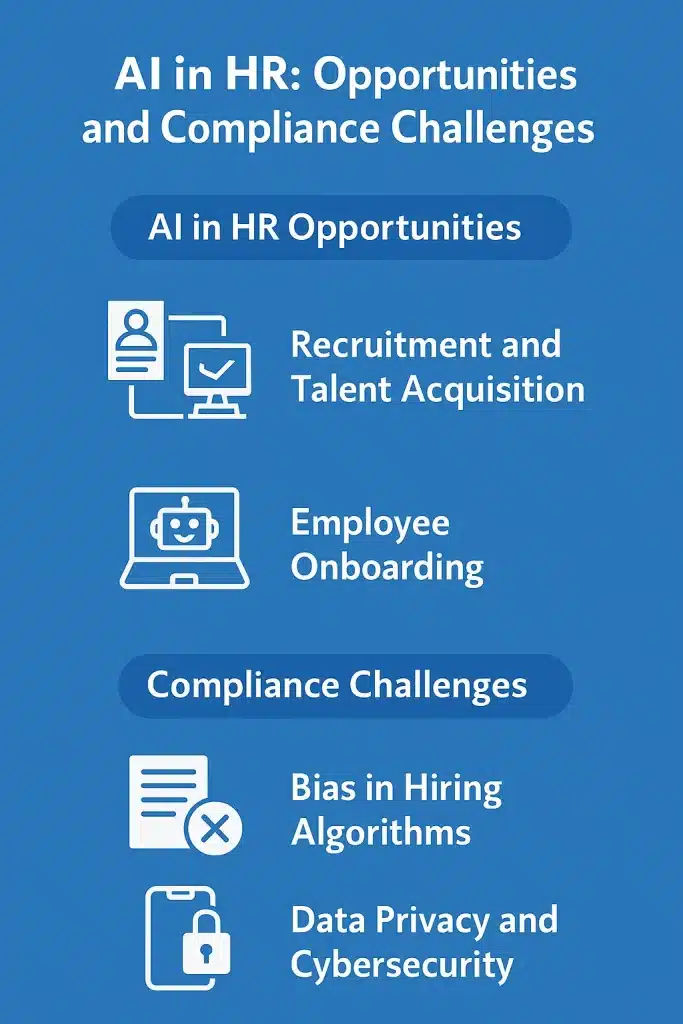
AI in HR: A Glimpse at the Opportunities
1. Recruitment and Talent Acquisition
AI has revolutionized the recruiting process by automating candidate sourcing, resume screening, and even initial interview assessments.
Tools like HireVue or LinkedIn Recruiter use natural language processing to match qualifications with job requirements at scale, reducing time-to-hire significantly.
2. Employee Onboarding
AI-powered chatbots and onboarding assistants can guide new hires through paperwork, benefits enrollment, and training resources—all without HR staff having to manage every step manually.
This is especially valuable in remote or hybrid work models.
3. Workforce Analytics and Performance Management
AI tools can analyze employee productivity, engagement trends, and skills gaps.
By using predictive analytics, HR leaders can proactively identify turnover risks or team inefficiencies, helping them make data-driven decisions.
4. Payroll and Time Tracking Automation
Intelligent payroll systems integrated with bookkeeping software can reduce errors, track time more accurately, and ensure compliance with wage laws.
This minimizes manual input, boosts efficiency, and lowers administrative costs.
Compliance Risks and Ethical Concerns with AI in HR
While AI brings remarkable efficiency, it also comes with regulatory and ethical challenges that Houston employers can’t ignore.
1. Bias in Hiring Algorithms
One of the most pressing issues is the risk of algorithmic bias. AI systems trained on biased datasets may unintentionally discriminate based on race, gender, or age.
This can expose employers to discrimination claims under federal laws like Title VII of the Civil Rights Act or the Age Discrimination in Employment Act.
Employers must ensure that the AI vendors they partner with conduct regular audits and maintain transparency about how their algorithms function.
2. Data Privacy and Cybersecurity
AI requires access to sensitive employee data—ranging from personal identifiers to behavioral metrics.
Without proper safeguards, this increases the risk of data breaches.
Our article on ensuring data security in payroll and HR covers best practices to secure digital employee records.
Businesses must adhere to both federal regulations like HIPAA (for health data) and state-level laws like the Texas Privacy Protection Act (TPPA) for data handling.
3. Automated Decision-Making and Employee Rights
The use of AI in performance reviews or disciplinary actions could violate employee rights if there’s no human oversight.
Employees must be given the opportunity to appeal decisions or understand how AI-informed judgments were made.
Houston-Specific Compliance Landscape
For Houston employers using AI in HR, local and state compliance must also be factored in:
-
Texas Workforce Commission (TWC) guidelines must be followed, especially when using AI for unemployment claims processing or wage reporting.
-
Houston businesses with operations in multiple states must also manage interstate compliance related to payroll, benefits, and labor laws.
To navigate these complexities, refer to our HR compliance strategies in Houston for practical tools and policies to remain audit-ready.
Integrating AI with Bookkeeping and Payroll Systems
Many businesses mistakenly treat HR and bookkeeping as separate silos.
However, AI-enabled platforms can integrate both functions seamlessly:
-
Syncing AI-powered time-tracking systems with payroll software like Gusto, ADP, or QuickBooks ensures real-time wage calculation and accurate tax withholding.
-
AI algorithms can flag discrepancies or anomalies in payroll data, helping identify fraud or compliance issues early.
-
Predictive bookkeeping models can forecast overtime costs or seasonal hiring needs, giving businesses a financial edge.
Whether you’re running a lean startup or managing a mid-size workforce, aligning AI with bookkeeping Houston services is essential for streamlined, compliant operations.
What’s Next?
Artificial intelligence is transforming HR into a more data-driven, automated, and responsive function—but without proper oversight, it can lead to costly compliance missteps.
For Houston businesses, the key to responsible AI adoption lies in robust data management and finance alignment.
We help businesses integrate AI-backed payroll and HR systems with reliable, compliant bookkeeping support.
From securing sensitive data to streamlining labor cost tracking, our services are built to scale with your evolving needs.
Contact us today to schedule a free consultation and see how our expert bookkeeping Houston team can help you future-proof your HR operations.